The Role of Skid Steers in Modern General Construction
Skid steers are the most important small machines on a construction site. They help workers move materials quickly and work in tight spaces where bigger machines are too large.
1. Why Compact Size Matters
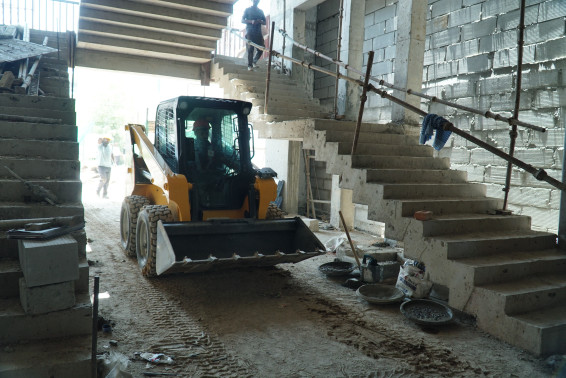
In big cities, construction sites are very crowded, increasingly characterized by tight perimeters and vertical complexity. There is not much room to move. The compact size of a Manitou skid steer is its biggest advantage.
Turning in Tight Spaces
A Skid Steer can "spin" on one spot. This is called a zero-turn radius. This helps the operator work in corners or inside small rooms without hitting walls. It also helps operator to work in "dead-end" zones of a site where larger equipment would be trapped.
2. Versatility and Efficiency: One Machine, Many Jobs
A Manitou skid steer is like a multi-tool for construction. You do not need 5 different machines; you only need 1 skid steer and the right attachments. You can switch the attachments in just seconds. A single machine can transition from a bulk earthmover to a precision cleaning tool.
The different available attachments for Skid Steers
- Pallet Forks: Essential for offloading deliveries in staging areas where space is too limited for a full-sized telehandler. Just like a forklift.
- Sweepers: Critical for maintaining site safety and meeting municipal "clean street" regulations at the end of a shift.
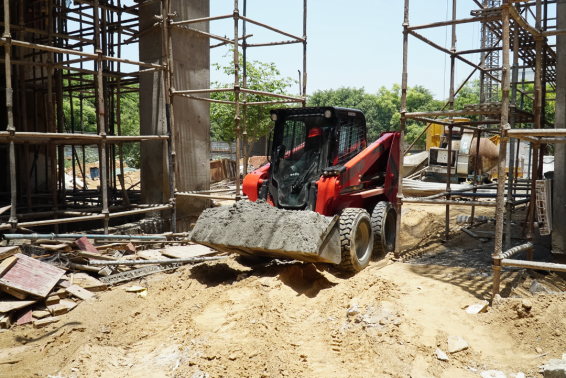
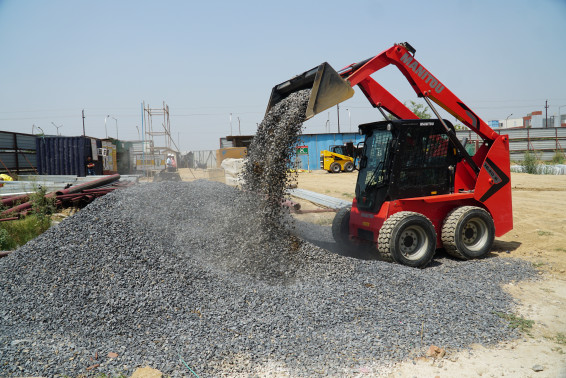
- Buckets: Used for everything from grade work to moving dirt, sand, or gravel.
The Manitou "Rapid-Task" Framework
To maximize efficiency, we propose the Rapid-Task Framework (RTF). This proprietary approach categorizes tasks into three zones:
- Zone A (Static): Material handling via forks.
- Zone B (Dynamic): Earthmoving and grading via buckets.
- Zone C (Maintenance): Site cleanup via sweepers.
3. Working Inside Buildings and on High Floors
Sometimes, construction happens inside a building or many floors above the ground. Because Manitou machines have a compact size and are not too heavy, a crane can lift them onto the top floor of a new building.
4. Buying Advice for 2026
As advised by the Compact Equipment Magazine, the Skid Steer market offers more choices than ever. That abundance can be overwhelming.
- Start with your application: Identify the work you perform most often.
- Attachments you rely on and the surfaces you operate on.
- Match machine size to transport limits and jobsite access.
- Evaluate hydraulic capability carefully: Flow, pressure and cooling matter more than headline horsepower.
- Consider future attachment needs, not just today’s tools.
- Demo: Spend time in the cab. Comfort, visibility and control layout affect productivity more than spec sheets suggest.
In a tight labor market, operator satisfaction matters. Finally, consider dealer support and service access. These machines earn money only when they are running.
Need a Skid Steer for your next jobsite?
Click here to Whatsapp Us for a quote, with a FREE 5 years warranty included!
- Application images
- Videos